
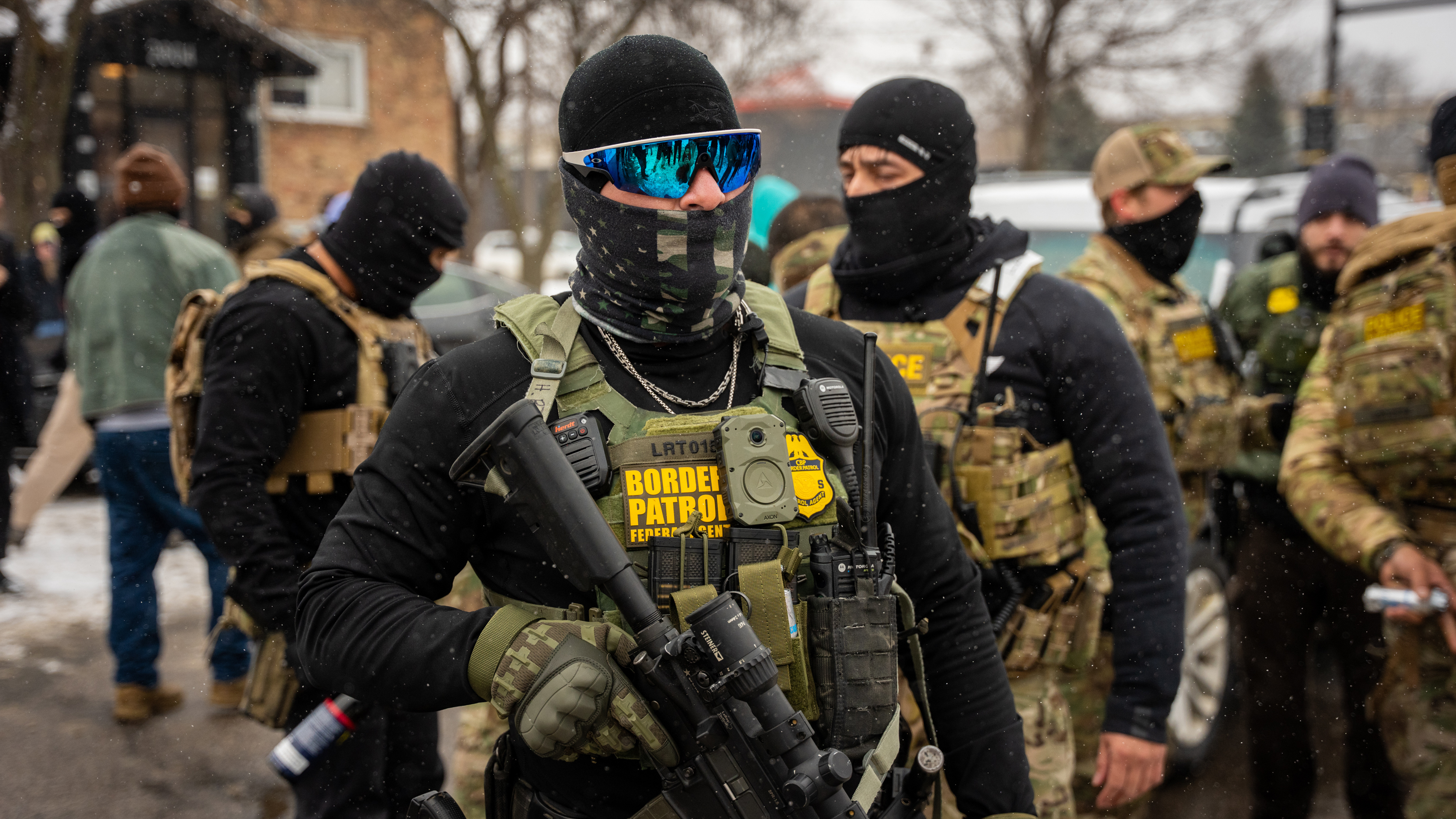
MINNEAPOLIS — In the days after Alex Pretti was killed while protesting ICE activity in Minneapolis and Renee Good, a 37-year-old mother of three, was killed in a separate January incident, then-Homeland Security Secretary Kristi Noem made a public promise: every DHS officer in the field would be equipped with a body camera, and the technology would roll out nationwide.
"We will rapidly acquire and deploy body cameras to DHS law enforcement across the country," Noem wrote in a social media post on February 2, 2026.
Congress backed the pledge with money. DHS's fiscal year 2026 funding included $20 million earmarked for the "procurement, deployment and operations" of body cameras, with the agency planning to purchase more than 5,000 units, according to a source familiar with the plan.
Noem was replaced as DHS Secretary by former Sen. Markwayne Mullin in March. Homeland Security officials have continued to tell lawmakers that cameras are being distributed nationwide.
But nearly six months after the promise was made, the rollout remains incomplete — and the gap has been exposed by a string of fatal encounters since:
July 7, Houston, Texas: Lorenzo Salgado Araujo, a Mexican national who had lived in the U.S. for more than 35 years, was fatally shot by an ICE officer during a vehicle stop. DHS said Salgado Araujo rammed a law enforcement vehicle before the officer opened fire; no video evidence has emerged to support that account. The agents on scene were not wearing body cameras, DHS confirmed. July 13, Biddeford, Maine: Joan Durán Guerrero, 26, was fatally shot by ICE during a vehicle stop. DHS said an officer fired "fearing for public safety" after the vehicle attempted to flee. Immigration agents involved were also not equipped with body cameras, a Homeland Security spokesperson confirmed. July 14, St. Augustine, Florida: A 28-year-old man died after fleeing on foot from an ICE and HSI stop and being struck by a tractor-trailer. NCN has requested comment from ICE on whether body cameras were present.
DHS has not said whether officers were wearing body cameras during the original January shooting of Renee Good. What is confirmed: the officer who fired the fatal shots, Jonathan Ross, was not using a body-worn camera — he was recording the encounter on his personal cell phone, holding it in one hand while he drew and fired his weapon with the other. A separate agent on scene was wearing a body camera, but not Ross. The shooting that prompted DHS's nationwide body camera pledge was itself missing proper body camera coverage from the officer who used deadly force.
In the Pretti case, Customs and Border Protection investigators were able to use body camera footage — from four Border Patrol agents who were equipped at the time — along with other evidence to determine that more than one officer fired shots.
A Homeland Security spokesperson said Thursday that cameras "have been deployed to more than half the field offices, with the remaining half to receive them in the next 60 days," citing the earlier government shutdown as the reason for the delay.
Rep. Sylvia Garcia, D-Houston, said DHS told her all officers would have body cameras by the end of July.
"Even after we've given ICE specifically $20 million for body cameras and Kristi Noem promised in February of this year that she was going to purchase them and get them in the field, that here we were in Houston that the agents didn't have them," Garcia said at a news conference.
Michelle Gross, president of the Minneapolis-based advocacy group Communities United Against Police Brutality, said ICE should not be conducting enforcement operations at all until every officer has a camera.
Official Statements
Kristi Noem (former DHS Secretary), Feb. 2, 2026 social media post: Pledged nationwide, rapid deployment of body cameras as funding became available.
DHS spokesperson, July 2026: Said cameras have reached more than half of field offices, with full distribution expected within 60 days; cited the government shutdown as the cause of delay.
Agency Responses
DHS/ICE — Has confirmed the absence of body cameras in the Houston and Biddeford shootings. Has not commented on whether cameras were present during the Renee Good shooting in January. NCN has an outstanding request for comment on the St. Augustine incident. Customs and Border Protection — Used available body camera footage in the Pretti investigation to help determine that multiple officers fired.
Current Investigation Status
The pace of DHS's nationwide body camera rollout remains unconfirmed independently. NCN is seeking additional comment from DHS on the specific timeline for full deployment and whether the end-of-July deadline cited by Rep. Garcia will be met.
Context
DHS has been slower than most local police departments to adopt body cameras. The first federal agents began using them in 2021. A 2022 executive order under the Biden administration mandated body camera use by federal law enforcement. The U.S. Marshals Service only fully equipped its deputies with cameras this past December, after an initiative that began six years earlier.
📍 Minneapolis, MN 🗓️ 1/12/2026 Real Stories. Real Impact. Across America. — National Correspondent Network


